







Yes, renting out desks in your private office can be legally allowed in India, but it must be done carefully. It is not automatically illegal to let another freelancer, startup, consultant, or small team use spare desks in your office. In fact, this is the basic idea behind many coworking and shared-office models.
But the legal position depends on one important question: do you have the right to allow other people to use that office space? If you own the office, the answer is usually easier. If you are only a tenant, you must check your lease agreement, landlord consent, building rules, municipal rules, and tax compliance.
Renting out desks is legal when the space is permitted for commercial use, the agreement allows sharing or subletting, and the activity follows local registration, safety, tax, and privacy rules.
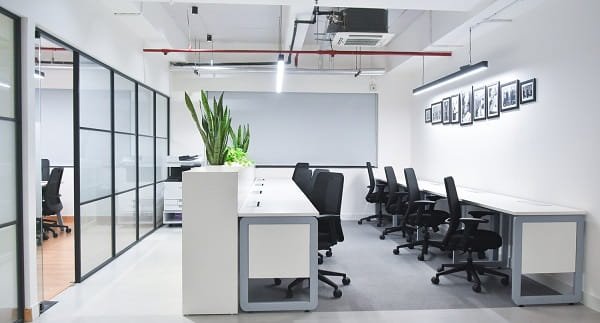
Desk Renting Is Not Always the Same as Subletting
Legally, there is a difference between giving someone a licence to use a desk and creating a sublease. If you simply allow someone to use a desk, Wi-Fi, meeting room, printer, and common facilities without giving exclusive possession of a separate area, it may be treated more like a licence or coworking arrangement.
But if you give a separate cabin, locked room, fixed area, or exclusive control over part of the premises for a fixed period, it may look like a sublease. This distinction matters because subleasing is often restricted by lease agreements and state tenancy laws.
Under the Transfer of Property Act, a lessee may transfer or sublease the whole or part of their interest in the property in the absence of a contract or local usage to the contrary. But the same point is important from the opposite side: if your lease agreement says “no subletting,” “no sharing,” “no third-party occupation,” or “no coworking use,” you should not rent desks without written consent.
If You Are a Tenant, Landlord Permission Is Crucial
Most commercial lease agreements restrict subletting, assignment, or sharing of possession without the landlord’s written approval. Even if you are not creating a formal sublease, allowing outsiders to use the office regularly may still violate the lease if the agreement is strict.
The Model Tenancy Act also shows this legal direction. It provides that subletting is not allowed unless permitted through a supplementary agreement, and the landlord and tenant must inform the Rent Authority about the sub-tenancy within the prescribed time. Since tenancy laws are state-specific and the Model Act is a framework for states, local rules must be checked.
So, if your office is rented, the safest step is to take written permission from the landlord. The permission should clearly allow desk sharing, coworking, third-party users, business visitors, signage, internet use, and any extra access cards or keys.
If You Own the Office, Check Building and Society Rules
If you own the office unit, you have more control, but still not unlimited freedom. The building must permit commercial use. If the property is in a residential apartment, mixed-use building, housing society, or plotted residential area, renting desks for business use may violate zoning rules, society bye-laws, municipal permissions, or building-use conditions.
Many societies allow a small professional office but object to regular visitors, employees, deliveries, noise, signage, or coworking-style operations. If the office is inside a commercial building, the rules are usually easier, but you should still check the building association rules and fire-safety norms.
Shops and Establishments Registration
A shared office or coworking-style setup may be treated as a commercial establishment. Shops and Establishments laws are state-specific, but they generally regulate commercial workplaces, working hours, records, holidays, and employment conditions.
For example, the Delhi Shops and Establishments Act defines a “commercial establishment” as premises where trade, business, profession, or work connected with it is carried on. Karnataka’s labour portal also asks for establishment address proof, owner identity proof, incorporation documents where applicable, and registration documents for Shops and Commercial Establishments registration.
So, if desk renting becomes a regular business, not just casual sharing, registration under the relevant state Shops and Establishments law may be needed.
GST and Tax Compliance
Desk rental income is taxable as business income or rental/service income, depending on the structure. If you are charging users for desks, cabins, internet, meeting rooms, maintenance, or office facilities, the income should be properly recorded and invoiced.
Under GST, lease or renting of property is treated as a supply of service. CBIC has clarified that lease, tenancy, easement, or licence to occupy land is a supply of services under GST. CBIC’s service classification also includes “rental or leasing services involving own or leased non-residential property” under SAC 997212.
This means GST may apply if your turnover crosses the applicable threshold or if reverse-charge rules apply in a particular situation. Because GST rules on commercial and residential renting can be technical, a CA should check the exact structure.
Fire Safety and Occupancy Limits
Renting desks increases the number of people using the premises. That affects fire safety, emergency exits, electrical load, seating layout, pantry use, and insurance. The National Building Code framework covers fire and life safety, smoke management, audits, electrical fire prevention, and building safety systems. A 2026 government response also noted that NBC 2016 includes detailed aspects of fire safety and maintenance of structures.
If you convert a small office into a crowded coworking space, you may breach occupancy limits or safety conditions. You should avoid blocking exits, overloading electrical points, using unsafe partitions, or allowing 24-hour access without security arrangements.
Data, Privacy, and Security Issues
Shared offices also create privacy and confidentiality issues. If you collect Aadhaar, PAN, phone numbers, email IDs, access-card records, visitor logs, CCTV footage, or payment details from desk users, you are handling personal data. The Digital Personal Data Protection Act, 2023 says consent must be free, specific, informed, unconditional, and unambiguous, and data collection should be limited to the specified purpose.
A good desk-rental agreement should mention data use, CCTV, access rules, confidentiality, internet use, visitor rules, and responsibility for equipment or documents.
What the Agreement Should Include
A desk-rental agreement should clearly state that the arrangement is only a licence to use workspace and does not create tenancy, ownership, or exclusive possession. It should mention desk number, access hours, fee, deposit, lock-in period, notice period, internet use, meeting room access, visitor rules, damage liability, confidentiality, no illegal activity, no subletting by the desk user, and termination rights.
If the landlord has given permission, attach or refer to that permission. If the property is in a society or commercial complex, follow the building rules.
Final Legal Position
Renting out desks in your private office is legally allowed if the office is meant for commercial use and you have the legal right to share the premises. Owners must check zoning, society, municipal, and fire-safety rules. Tenants must take written landlord permission before allowing regular third-party occupation.
FAQs
Q: Can I rent one or two empty desks in my office?
A: Yes, usually you can, if your office is legally used for commercial activity and your lease or ownership rules allow sharing. If you are a tenant, take written landlord consent.
Q: Is desk renting the same as subletting?
A: Not always. A simple desk-use licence may not be a sublease. But giving exclusive possession of a cabin, room, or fixed portion can look like subletting.
Q: Do I need GST registration for renting desks?
A: It depends on your turnover, registration status, type of property, and billing structure. Desk rental or office-sharing charges may fall under taxable services, so a CA should check the exact case.
Q: Can I run a coworking space from a residential flat?
A: That is risky. It may violate zoning rules, society bye-laws, municipal permissions, lease terms, or residential-use restrictions, especially if many outsiders regularly visit the premises.