







A commercial cloud kitchen can be legal in a basement, but only if the basement is legally approved for that kind of use. It is not enough to say, “I have an FSSAI licence, so my cloud kitchen is legal.” In India, a basement cloud kitchen must satisfy food safety law, municipal trade rules, building-use permission, fire safety norms, ventilation requirements, gas-cylinder rules, landlord or society permission, and local zoning laws.
A basement cloud kitchen is legal only when the basement is approved for commercial food preparation and all fire, food, municipal, and safety permissions are in place. If the basement is residential, poorly ventilated, not approved for commercial cooking, or used without fire clearance, it can become illegal and dangerous.
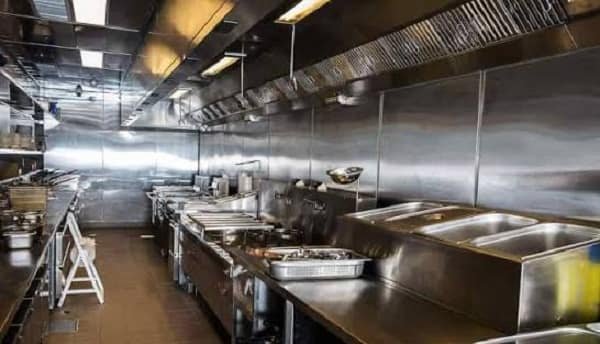
Why Basement Cloud Kitchens Are Legally Sensitive
A cloud kitchen is a full commercial food business even if it has no dine-in customers. It involves cooking, storage, packaging, delivery staff movement, gas or electric equipment, exhaust systems, waste disposal, pest-control obligations, and food-safety responsibilities. When this activity is done in a basement, the risk becomes higher because basements often have limited exits, poor natural ventilation, smoke accumulation risk, LPG leakage risk, and difficult fire evacuation.
This is why authorities do not judge a basement cloud kitchen only as a food business. They also check whether the building itself can safely support that use.
FSSAI Licence Is Mandatory, But Not Sufficient
Every food business operator in India is required to be licensed or registered under the Food Safety and Standards Authority of India. Section 31 of the Food Safety and Standards Act, 2006 says no person shall commence or carry on any food business except under a licence, while petty or small food businesses must register as specified.
So, a cloud kitchen must have the correct FSSAI registration or licence based on its scale, turnover, location, and activity. The FSSAI registration proves that the operator is recognised as a food business. But it does not automatically approve the basement as a lawful kitchen space. A person may have an FSSAI number and still violate municipal, building, fire, or lease rules.
Building Permission and Basement Use
The most important question is whether the basement is approved for commercial kitchen use. Building bye-laws are local. A basement may be allowed for parking, storage, services, utilities, or specific commercial activities, depending on the approved building plan and local rules. But using it as a hot-food commercial kitchen is a different matter.
For example, Delhi’s Unified Building Bye-Laws state that basements are permitted subject to clearance from the authority, concerned local body, other concerned departments, and Delhi Fire Service. The same bye-laws also say fire and life-safety measures must follow the National Building Code and Delhi Fire Service Rules where applicable.
This shows the main principle clearly: basement use is not decided casually by the owner or tenant. It must match the sanctioned plan and required clearances.
Fire Safety Is the Biggest Issue
A basement cloud kitchen without proper fire protection is highly risky. The National Building Code’s fire-safety part covers fire zones, occupancy classification, fire-resistant construction, evacuation, smoke, fumes, panic, exits, and firefighting installations. This matters because cooking activity creates heat, flame, oil, electrical load, gas risk, and smoke.
A proper basement kitchen may need fire NOC, exhaust ducting, smoke detectors, fire extinguishers, sprinklers where required, emergency lighting, clear exits, protected staircases, fire-rated doors, and safe electrical wiring. If the basement has only one narrow staircase, poor ventilation, no exhaust route, or blocked exit, permission may be refused or the activity may be stopped.
Recent fire-department surveys have also found cloud kitchens operating from basements, flats, and high-rise areas without proper NOCs, with unsafe gas-cylinder storage reported as a major concern. This is exactly why basement cloud kitchens face stricter scrutiny.
Ventilation, Exhaust, and Drainage
A commercial kitchen needs strong ventilation. Basements are naturally weak in this area. Model building requirements say that where natural lighting and ventilation are not available, artificial lighting and mechanical ventilation must be provided as per the National Building Code. They also require basement drainage protection and ventilation standards for basement compartments.
For a cloud kitchen, this means the operator should have a proper chimney, exhaust duct, fresh-air system, grease filter, drainage line, and waste-water arrangement. Smoke or food smell should not enter upper floors, neighbouring shops, flats, staircases, or common areas.
LPG and Gas-Cylinder Safety
If LPG cylinders are used, the kitchen must follow gas-safety rules. Commercial kitchens often store more than one cylinder, and unsafe storage in a basement can be extremely dangerous because leaked LPG can accumulate in low areas. PESO-related guidance for LPG storage sheds refers to non-flammable construction, minimum ventilation area, and safety distances for larger LPG storage.
A basement kitchen should avoid illegal cylinder stocking, domestic-cylinder misuse, unauthorised refilling, and hidden storage. Piped gas or properly approved commercial LPG arrangements are safer, but they still need technical compliance.
Municipal Trade Licence and Local NOC
Most cities require a health trade licence or municipal trade permission for restaurants, eateries, commercial kitchens, or food preparation units. A cloud kitchen may not serve customers on-site, but it still cooks commercially. Local authorities may inspect sanitation, waste disposal, pest control, fire safety, zoning, and nuisance complaints.
If the basement is inside a residential building or housing society, the risk increases. Regular delivery riders, food smell, noise, cylinder movement, waste disposal, and late-night operations can lead to objections from neighbours or the society.
Lease, Society, and Landlord Permission
If the operator is a tenant, the lease must permit commercial kitchen use. Many commercial leases allow office or retail use but not cooking. A basement leased for storage cannot automatically be converted into a cloud kitchen. Written landlord consent is necessary.
If the building is under a society, association, mall, commercial complex, or industrial estate, internal rules must also be checked. Some buildings allow offices but prohibit food production because of fire and exhaust issues.
Final Legal Position
A commercial cloud kitchen in a basement is not automatically illegal, but it is legal only when the location is approved for that specific use. The operator must have FSSAI registration or licence, municipal trade permission, fire NOC where applicable, lawful building use, safe ventilation, proper exhaust, drainage, gas safety, waste management, and landlord or society approval.
In simple words, FSSAI allows you to run a food business, but it does not by itself legalise a basement kitchen. The basement must also be legally and safely fit for commercial cooking.
FAQs
Q. Can I run a cloud kitchen from my home basement?
It is risky unless local zoning, society rules, building permission, fire safety, ventilation, and FSSAI requirements allow it. A residential basement is usually not safe or automatically approved for commercial cooking.
Q. Is FSSAI licence enough for a basement cloud kitchen?
No. FSSAI is necessary for food business operation, but you may also need municipal trade licence, fire clearance, building-use permission, GST compliance, and landlord or society approval.
Q. Can a basement be used only for food storage?
Sometimes yes, if the sanctioned plan and local rules allow storage use, and food-safety, pest-control, ventilation, and fire-safety conditions are followed. Cooking is a higher-risk activity than storage.
Q. What is the safest location for a cloud kitchen?
A ground-floor or properly approved commercial/industrial kitchen space with clear fire exits, ventilation, drainage, exhaust permission, and legal food-business approvals is usually safer than a basement.