







Firing gig workers without notice periods is a legally tricky issue in India because gig workers are not always treated like regular employees. In many cases, a gig worker is treated as an independent contractor or platform worker. But that does not mean a company can remove, deactivate, or block the worker in any unfair, illegal, or completely arbitrary manner.
The simple legal position is this: if the person is truly a gig worker, notice period mainly depends on the contract and applicable gig-worker laws. But if the person is actually working like an employee, labour-law protections on termination, retrenchment, notice, and compensation may apply.
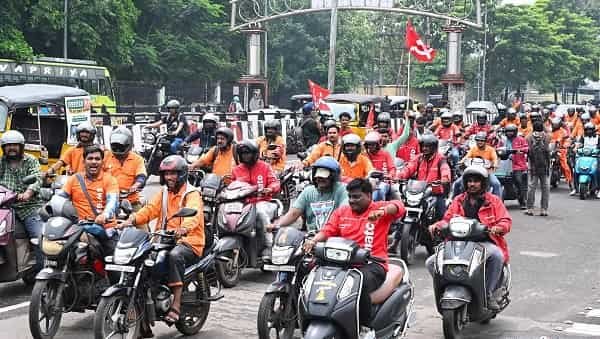
Gig Worker vs Employee: The Main Difference
A regular employee usually works under the control and supervision of an employer. The employer decides working hours, duties, reporting structure, leave rules, salary, discipline, and termination process. In such cases, the worker may get protection under labour laws, standing orders, appointment letters, company policies, and state-specific employment rules.
A gig worker is different. Under the Code on Social Security, 2020, a “gig worker” is a person who performs work or participates in a work arrangement and earns from such activity outside the traditional employer-employee relationship. The Code also recognises “platform workers” and provides for registration and social security schemes for gig and platform workers.
So, if a delivery partner, driver, freelance designer, home-service partner, content freelancer, or app-based worker is genuinely working outside a traditional employment relationship, the platform may not need to follow the same notice-period rules that apply to regular employees. But the platform must still follow its contract, platform policy, state gig-worker law where applicable, and basic principles of fairness.
Can a Platform Deactivate a Gig Worker Without Notice?
In many states, there is no general rule saying every gig worker must receive a fixed 15-day or 30-day notice before termination. If the contract says the platform can terminate immediately for fraud, violence, misconduct, safety risk, fake documents, customer abuse, or repeated breach of policy, immediate deactivation may be legally safer.
But if the platform removes the worker without reason, without evidence, without warning, or without any appeal process, the worker may challenge it as unfair, arbitrary, or contrary to the contract. This is especially serious when the worker depends heavily on the platform for income.
For platform-based workers, “firing” often happens as account deactivation, suspension, blocking of login, removal from task allocation, or making the worker ineligible to accept work. Karnataka’s Platform Based Gig Workers Act, 2025 specifically defines termination to include materially restricting access to the platform, blocking access, suspending the worker, or making the worker ineligible to provide services.
Karnataka’s Stronger Protection for Gig Workers
Karnataka has gone further than many other states. Its 2025 law says the contract between an aggregator and a platform-based gig worker must contain an exhaustive list of grounds for termination or deactivation. It also says the aggregator or platform should not terminate or deactivate a gig worker without valid written reasons, 14 days’ prior notice, and following principles of natural justice. An immediate termination exception exists where the ground includes bodily harm, but even then, the worker has a right to appeal.
This is a very important development. It shows that gig-worker termination is moving away from silent app-based deactivation and towards reasoned, documented, appealable decisions. Karnataka’s law also gives registered gig workers a grievance-redressal route for disputes involving payouts, deductions, termination, and other issues.
However, this area is still evolving. Several platforms and industry bodies have challenged Karnataka’s gig-worker law before the Karnataka High Court, including issues around welfare fees and dispute-resolution obligations.
What About Central Labour Codes?
The central Code on Social Security gives legal recognition to gig and platform workers and allows the government to frame schemes for life and disability cover, accident insurance, health and maternity benefits, old-age protection, crèche, and other benefits. It also provides for aggregator contributions to fund such schemes.
But social security recognition is not exactly the same as employee-style termination protection. The Code recognises gig workers as a separate category outside the traditional employer-employee relationship. So, unless the facts show that the worker is actually an employee, normal employee termination rules may not automatically apply.
If the Gig Worker Is Actually an Employee
Many companies call workers “partners,” “freelancers,” or “independent contractors,” but labels are not final. Courts and authorities may look at the real relationship. If the company controls working hours, fixes attendance, prevents work for others, gives daily supervision, imposes employee-like discipline, and makes the worker economically dependent, the worker may argue that the relationship is actually employment.
If the worker is treated as an employee or “worker” under labour law, termination without notice can become risky. Under the Industrial Relations Code, retrenchment of a worker with at least one year of continuous service generally requires one month’s written notice or wages in lieu of notice, retrenchment compensation, and notice to the appropriate government authority.
So, a company cannot avoid labour-law duties merely by using the word “gig worker” if the actual relationship looks like regular employment.
When Immediate Termination May Be Defensible
Immediate termination or deactivation may be legally defensible in serious cases such as violence, sexual harassment, theft, fraud, forged documents, major safety violations, criminal conduct, abuse of customers, misuse of platform data, or repeated serious breach of contract.
Even then, the safer practice is to keep evidence, give written reasons, preserve records, allow the worker to respond where possible, settle pending payments, and provide an appeal route. A clean process protects both the company and the worker.
What Companies Should Do
Platforms and businesses should not rely on vague clauses like “we can terminate at any time without reason.” A better contract should clearly mention grounds for termination, warning process, immediate suspension grounds, pending payout rules, appeal process, data access after deactivation, and time limits for resolving disputes.
Companies should also avoid algorithm-only deactivation without human review, especially where the worker’s income is affected. Automated ratings, customer complaints, fraud flags, or cancellation patterns may be useful, but they should not become a blind punishment system.
Final Legal Position
It may be legal to terminate a gig worker without a traditional notice period if the contract allows it and no state law requires notice. But it is not legally safe to deactivate gig workers arbitrarily, secretly, or without valid reason. Where state gig-worker laws apply, such as Karnataka, stronger notice and appeal requirements may exist. If the worker is actually an employee in substance, labour-law notice and compensation rules may apply.
In simple words, a gig worker may not always have an employee-style notice period, but platforms should still give valid reasons, follow the contract, settle dues, and provide a fair grievance process.
FAQs
Q: Can a platform remove a delivery partner without notice?
A: It depends on the contract and state law. For serious misconduct, immediate suspension may be possible. But arbitrary deactivation without reason or appeal can be challenged.
Q: Do gig workers get the same notice period as employees?
A: Usually no, if they are genuine independent contractors or platform workers. But if the real relationship is employee-like, labour-law protections may apply.
Q: Is app deactivation the same as termination?
A: For platform workers, yes, it can be treated like termination if it blocks the worker from earning through the platform. Karnataka law specifically includes blocking, suspension, and making the worker ineligible to provide services within termination.
Q: What is the safest termination process for gig workers?
A: Give written reasons, follow the contract, provide notice where required, allow an appeal, clear pending payouts, and avoid purely automated termination without human review.