






The word “dividend” in investing carries a certain appeal. It sounds like income. It sounds like reward. It sounds like the fund is doing well and sharing its profits with you.
So when a mutual fund announces a dividend — now officially called an Income Distribution cum Capital Withdrawal (IDCW) payout — many investors feel pleased. Some even choose funds specifically because they pay regular dividends, treating it as a source of monthly or quarterly income.
What most of them don’t realise is that a mutual fund dividend is not the same as a stock dividend. And understanding the difference isn’t just academic — it directly determines whether you’re building wealth or quietly dismantling it.
First: What Changed in Name
SEBI in 2021 mandated that mutual funds rename their “Dividend” plans to IDCW — Income Distribution cum Capital Withdrawal. The name change wasn’t cosmetic. It was a regulatory attempt to communicate the truth about what actually happens when a fund pays out a “dividend.”
The old name implied income generation. The new name explicitly acknowledges that what you receive may be a return of your own capital — not profit on top of your investment. That distinction is the entire story.
Why Do Fund Houses Declare Dividends?
Fund houses declare dividends from the distributable surplus — the accumulated and realised gains within the fund. This includes profits booked from selling securities within the portfolio, dividend income received from underlying stocks, and interest income earned on debt instruments.
The reasons fund houses choose to declare dividends vary:
Investor demand. Many conservative and retired investors — particularly those who entered mutual funds before SWP (Systematic Withdrawal Plan) became mainstream — prefer periodic cash payouts. Fund houses cater to this preference, especially in balanced and debt-oriented funds.
Marketing appeal. A fund announcing a “₹2 per unit dividend” generates attention. It signals activity, profitability, and generosity — even if the financial reality is more nuanced. It has historically been used as a marketing tool to attract new investors who misread it as income generation.
Portfolio management. In some cases, declaring dividends is a natural outcome of booking profits in a rising market. When equity holdings appreciate significantly, fund managers may book gains and distribute a portion rather than letting unrealised profits accumulate excessively.
The NAV Impact: The Part Nobody Talks About
Here is the mechanics that every investor must understand before choosing an IDCW plan.
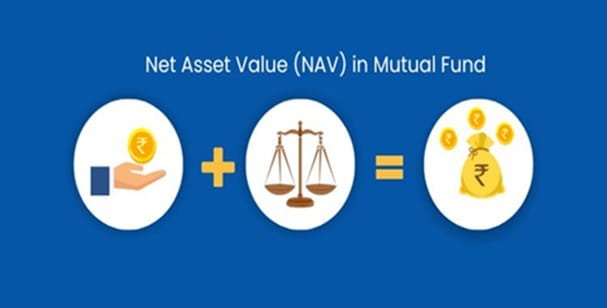
When a fund declares a dividend of ₹2 per unit, the NAV of the fund falls by exactly ₹2 per unit on the ex-dividend date. Not approximately. Exactly.
If the NAV was ₹20 before the dividend declaration, it becomes ₹18 after the payout. You receive ₹2 per unit in cash. Your total wealth — cash received plus current value of units — remains exactly what it was before. Nothing has been created. Nothing extra has been generated.
This is fundamentally different from a stock dividend, where the company has earned profits and is distributing a share of those earnings. In a mutual fund, the money in your hand came directly out of the fund’s NAV. It is a transfer, not a gain.
Consider two investors who each put ₹1,00,000 into the same fund — one in the Growth plan, one in the IDCW plan. After three years, the fund has grown and declared dividends twice. The Growth plan investor’s NAV has compounded cleanly. The IDCW investor has received two cash payouts — but their unit value has been reduced by those exact amounts on both occasions. If they reinvested those payouts, transaction costs, tax friction, and behavioural drag would likely leave them worse off than the Growth investor.
The Tax Problem With IDCW
This is where IDCW plans genuinely hurt most investors.
Dividends received from mutual funds are added to your income and taxed at your applicable income tax slab rate. For someone in the 30% tax bracket, a ₹10,000 dividend payout results in ₹3,000 going to tax.
In contrast, a Growth plan investor only pays capital gains tax when they choose to redeem — long-term capital gains on equity funds are taxed at 12.5% beyond ₹1.25 lakh per year, and the investor controls the timing.
IDCW forces a taxable event on you. Growth gives you control over when you crystallise gains and face taxation. For wealth creation over long periods, Growth almost always wins on tax efficiency.
When Does IDCW Actually Make Sense?
It is not entirely without merit. IDCW plans can serve investors who genuinely need periodic cash flow and have no other structured income source. Retired investors with low taxable income — falling in the zero or 5% tax bracket — can receive IDCW payouts with minimal tax friction. For them, it provides liquidity without the behavioural effort of manually redeeming units.
But for every working-age investor in a higher tax bracket building a long-term corpus, the Growth plan is the rational, mathematically superior choice.
FAQs
Q1. Is a mutual fund dividend the same as a stock dividend?
No. A stock dividend comes from company profits — your shareholding value and the dividend are separate. A mutual fund dividend is taken out of the NAV itself. Your total value does not increase; it simply gets redistributed between your fund holding and your bank account.
Q2. Can I switch from IDCW to Growth plan within the same fund?
Yes. You can switch from the IDCW option to the Growth option of the same scheme. However, this switch is treated as a redemption and re-investment for tax purposes, potentially triggering capital gains tax.
Q3. Is dividend reinvestment (IDCW Reinvestment) better than plain IDCW payout?
Slightly better in terms of compounding continuity, but it still triggers a taxable event at the time of reinvestment and incurs transaction costs. The Growth plan remains cleaner and more tax-efficient for long-term investors.
Q4. Why do some investors still prefer IDCW despite its drawbacks?
Primarily psychological comfort — receiving cash feels like income. For low-income retirees, it also serves a genuine cash flow purpose. Behavioural factors often outweigh mathematical ones in personal finance decisions.
Q5. Does the frequency of dividend declaration affect returns?
Yes, negatively for most investors. More frequent payouts mean more frequent NAV reductions, more taxable events, and more friction. A fund that declares monthly dividends compounds less effectively than one that retains and reinvests all gains in the Growth plan.
A dividend that comes from your own investment is not income — it is your money returning home in a smaller coat.